

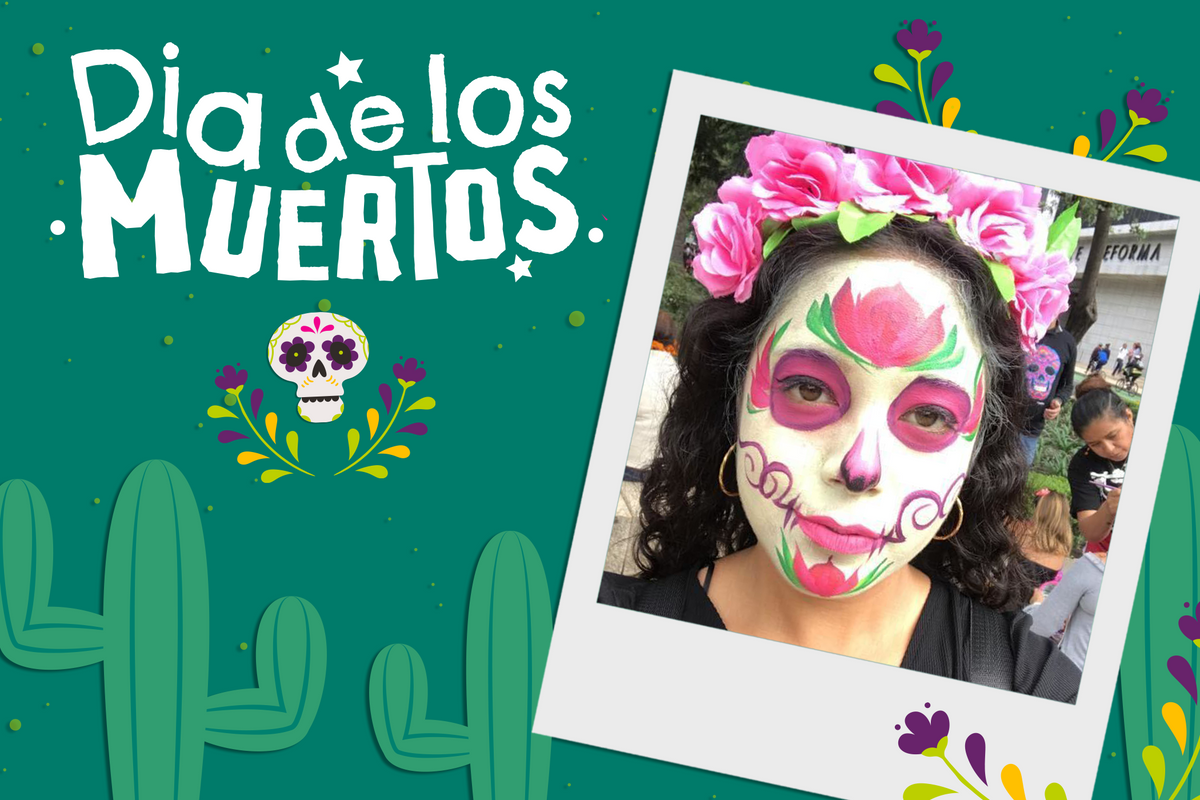
Karla is responsible for purchasing in our team. Until recently, she lived in Mexico and knows the traditions inside out. Día de los Muertos is her absolute favorite day, and here you can find out why.
Dear Karla, what exactly is Día de los Muertos?
The Day of the Dead is a Mexican tradition celebrated on November 1st and 2nd in honor of the deceased.
In the beliefs of the indigenous people, the Day of the Dead signifies the return of the dead to the world of the living. Here, they are meant to reunite with their relatives and partake in the food placed on the altars prepared for them.
During this celebration of the Day of the Dead, death is not an absence but a living presence. Death is a symbol of life. The festival takes place on November 1st and 2nd because it is divided into different categories: According to the Catholic calendar, November 1st is All Saints' Day, a day dedicated to the "little dead" or children, and November 2nd is dedicated to adults.
What does a typical Day of the Dead look like?
These days are celebrated throughout Mexico, but it looks a little different in each state. In most cases, there are festivals or carnivals in the streets where people dress up as skulls and "Catrinas" (female skulls).
Furthermore, many families set up Ofrendas and altars in their homes every year, adorned with Cempasúchil flowers, Papel Picado, sugar skulls, Pan de Muerto, Mole, or a dish that their relatives to whom the Ofrenda is dedicated enjoyed.
Family members visit the graves of their loved ones, where they have a picnic or play the guitar or other instruments.
The graves are decorated with flowers and often with altars on the gravestones.
What are traditional things on Día de los Muertos?
- the altars (Ofrendas)
- the Bread of the Day of the Dead (Pan de Muerto)
- the skull or Catrina costumes
- the literary Calaveritas (Mexican poems)
- the Cempasúchil flowers (Marigold) for decorating the altars
- Papel Picado (colorful garlands)


